

Regain Your Life With Occupational Therapy
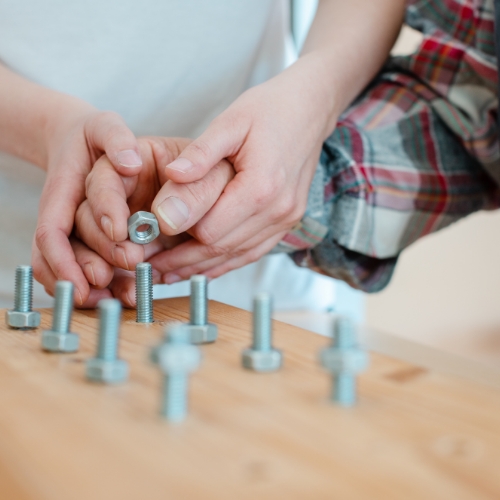
Occupational therapy is a healthcare profession that focuses on helping individuals improve their ability to perform daily tasks. Our occupational therapists (OTs) at Elliott Physical Therapy work with people with various upper extremity challenges that are looking to improve their participation in self-care, instrumental activities of daily living, health management, rest/sleep, education, work, leisure and social participation. The main goal of occupational therapy is to help you or a loved one achieve greater independence and improve your overall quality of life.
Our occupational therapists help our clients (and members of their support team) learn how to use adaptive equipment and techniques to improve their daily living skills and participate within their communities. We also provide optimal patient care through education for both the individuals and their caregivers.
We use an evidence-based approach to evaluate and treat our client’s needs. We will develop a customized treatment plan that includes exercises, adaptive equipment, and occasionally upper extremity orthoses/splints to help you perform daily activities, such as dressing, cooking, and work-related tasks.
Conditions That Occupational Therapy Treats
Occupational therapists (OTs) work with individuals of all ages to help them perform everyday activities. They commonly treat conditions such as:
Arthritis
Chronic joint inflammation can lead to mobility issues and pain. OTs teach pain management techniques, joint protection strategies, and adaptive methods for performing daily tasks.
Traumatic Injuries
Injuries like fractures, nerve/tendon injuries, or burns can limit a person’s ability to perform daily tasks. OTs help individuals regain their skills and suggest modifications or adaptive equipment when necessary
Repetitive/overuse injuries
Issues such as tendonitis/tendonosis of the hand, wrist, elbow or shoulder, and carpal tunnel/cubital tunnel can develop over time. These conditions can improve with OT interventions and ergonomic assessment for positioning and adaptive equipment/techniques.
Torticollis
Torticollis, sometimes called “wry neck,” refers to a condition where the neck muscles cause the head to tilt or rotate involuntarily. It can affect patients of any age and varies widely in cause and severity.
In infants, it is most commonly caused by tightness in the sternocleidomastoid (SCM) muscle, often due to positioning in the womb or during birth. In older children and adults, causes can range from muscle strain and poor posture to neurological conditions, infections, or medication side effects.
Occupational Therapy Treatments
When you visit one of our occupational therapists, they will perform a thorough exam to identify the issues impacting you or a loved one. This assessment will address your medical history, current symptoms, and other health factors that could be contributing to your condition.
OT treatments that we use may include:
- Activity modifications: Our occupational therapists help patients learn new skills or improve existing ones with activity modifications. OTs will consider each patient’s abilities and determine which areas could be targeted for improvement.
- Strength, flexibility, and coordination exercises: OT may include exercise and stretching to increase your strength, flexibility, and mobility. These techniques typically involve using resistance bands for strength or restoring balance and coordination.
- Custom splints and orthoses: These devices are used to provide extra support and allow for proper alignment. Custom splints and orthotics are intended to restore functions in the affected area. Examples include ankle braces, finger splints, and spinal braces.
- Scar management/instrument assisted soft tissue work: Effective scar management is crucial for post-surgery recovery. Scar adhesions can hinder results, but specialized tools and massage can improve motion by breaking them up. These tools include thermoplastic, dycem, vibrator, IASTM, and extractor instruments.
- Paraffin treatments: Paraffin wax is a moist heat modality particularly effective for hands and wrists, providing circumferential coverage for benefits like improved ROM, softened scar tissue, decreased pain, and reduced inflammation. These effects can enhance therapy progress and accelerate improvements.
- Grip strengthening: Occupational therapists assess grip strength and use tools like calibrated grippers and therapy putty to customize interventions for improving grip to help achieve your goals. Strong grip is important for many daily activities.
- Posture retraining: Strengthening postural muscles like the rotator cuff and surrounding shoulder and neck muscles can prevent or alleviate shoulder impingement, nerve entrapment, and pain. Postural awareness is key, and rehabilitation may include modalities and manual therapy alongside strengthening exercises.
- Edema management: Hand edema can cause pain, stiffness, and limited function. Occupational therapists at Elliott PT use specialized techniques to reduce swelling and restore function.
- Kinesiology & athletic taping: Kinesiology and athletic taping is a therapeutic technique that involves applying specialized dynamic or static adhesive tape to the skin to support musculoskeletal structures, reduce pain and swelling, and address scar adhesion. The tape’s stretch influences its effects on muscle activation, joint stability, and circulation. It is most effective when used with other therapies like manual therapy and exercise.
- Adaptive equipment: Adaptive equipment is often necessary for treatment, which includes wheelchairs, walkers, or other tools to help clients perform tasks more independently. Some common types of adaptive equipment used by our OTs include:
- Dressing aids: Button hooks, long-handled shoe horns, dressing sticks, sock aids, and elastic shoelaces to promote independent dressing.
- Eating utensils: Weighted utensils, plate guards, non-slip placemats, and adapted cups to assist with feeding and meal preparation.
- Writing aids: Pen grips, weighted pens, and writing splints to improve handwriting and motor control.
- Bathing and toileting aids: Shower chairs, grab bars, raised toilet seats, and long-handled sponges to enhance safety and independence in the bathroom.
- Reachers and grabbers: Extending tools to help individuals lift items without bending or stretching.
- Ergonomics: Ergonomics helps patients modify their workplace while managing their condition and accompanying symptoms. An OT will assess the different products and systems that need to be rearranged to fit the patient using them. The purpose is to reduce the risk of injury by improving the workspace environment.
Occupational therapy will allow you to return to everyday tasks and the activities you enjoy. Our rehabilitation programs at Elliott Physical Therapy will help you achieve goals to develop, improve, and maintain skills required for daily living and working.
Want to learn more about the benefits of occupational therapy? Contact Elliott Physical Therapy in Hanover to discover how our treatments can help you!
Your Next Steps…
Request An Appointment
Come in for a Comprehensive Evaluation
Receive A Custom Treatment Plan
Work Hard and Progress In Your Recovery
Recover & Enjoy Life Pain-Free!