


Common Causes of Foot Pain–And How Physical Therapy Can Help
You want to go for a nice evening stroll or spend an afternoon at the mall. But that pain in your foot makes prolonged walking seem like an impossibility. Now what?
Foot pain is a common problem–and one that can have a significant impact on your day-to-day life. If severe enough, it becomes a risk factor for other concerns, particularly among older people, including decreased balance, increased fall risk, and general loss of mobility.
Fortunately, physical therapy at Elliott Physical Therapy can help you find relief. Our team of experts will dig down to identify the root cause of your pain. Then, we’ll develop a customized treatment plan to resolve the underlying injury or condition, helping to ensure lasting relief.
Don’t let foot pain hobble you completely! Give us a call to set up an appointment to uncover the source of your foot discomfort.
What Are the Common Causes of Foot Pain?
When determining the source of your foot pain, you’ll first want to pinpoint where the pain is coming from. Is it along the bottom of your foot? Is it along the top of your foot? In your heel? Could your ankle be involved?
Our therapists will conduct a detailed evaluation to ensure we fully understand your symptoms. We’ll review your health history and recent activities and perform a physical examination that gives a complete picture of your condition. From there, we can determine the underlying injury or condition causing you pain.
While causes of foot pain vary wildly, here are some of the most common:
- Plantar Fasciitis: This is the most common cause of foot pain, occurring in about 10% of the general population. It causes pain and stiffness along the bottom of your foot and into your heel and occurs when certain tissue (the plantar fascia) becomes swollen and inflamed.
- Achilles Tendonitis: Another example of inflammation in foot tissue, Achilles tendonitis causes pain and range of motion restriction in the tendon that runs along the back of your heel (the Achilles tendon).
- Heel Spurs: This condition refers to a bony growth that develops on your heel bone due to stress and strain on the ligaments and tendons.
- Stress Fractures: Stress fractures are small cracks in the bone that generally occur due to overuse. While they can happen anywhere, your feet are particularly susceptible as they absorb much of the impact from activities like running, excessive walking, and jumping.

How We Treat Foot & Ankle Pain
Therapeutic Exercise: Exercise is one of the most effective treatments for many foot and ankle conditions, and it’s the foundation of your treatment plan. We’ll create a program based on your specific diagnosis, including progressive strengthening for the foot, ankle, and calf, targeted stretching where needed, and balance and coordination exercises to improve stability. The goal is not only to reduce your symptoms but also to build stronger, more resilient tissue that can handle the demands of your daily life.
Activity & Footwear Guidance: Foot pain rarely develops without a cause. A new running routine, long hours standing on concrete, or shoes that have lost their support can all contribute. We’ll look at what has changed, help you modify your activity level so you can stay active while recovering, and provide practical footwear recommendations, including what features to look for and what to avoid.
Taping & Foot Orthoses: Sometimes you need pain relief while strength is still improving. Low-Dye taping can help reduce heel pain, often within a single visit, and it also helps determine whether arch support may benefit you long term. If it does, we’ll recommend the right over-the-counter or custom orthoses for your needs. If you don’t need them, we’ll tell you that, too.
Gait & Running Analysis: For runners and active individuals, the way you move can be just as important as where you hurt. We’ll evaluate your walking and running mechanics to identify movement patterns that may be contributing to your symptoms, then recommend specific changes to your cadence, foot strike, or running form when appropriate.
Manual Therapy: Hands-on treatment is not a standalone solution, but it can be an important part of your recovery. It can improve ankle mobility, reduce stiffness, and make your exercise program more comfortable. Joint mobilization, soft tissue techniques, and myofascial release are all tools we use to help you move better.
Dry Needling: For persistent heel pain or calf tightness that hasn’t improved with other treatments, dry needling may help reduce pain and improve tissue mobility. This service is available at all nine of our locations, and your physical therapist will explain the process and answer any questions before treatment begins.
Additional Pain Relief: When appropriate, we may use heat, ice, or electrical stimulation to provide short-term symptom relief. These treatments are always used to support your active rehabilitation program, not replace it.
Our physical therapists treat plantar fasciitis, Achilles tendinopathy, ankle sprains, tendon and nerve pain, and post-surgical recovery at all nine of our locations.
🦶 Foot Pain Detective
Can you identify the most likely cause? Test your knowledge!
Great Job!

Schedule An Appointment Today!
The first step in resolving your foot pain is correctly identifying its cause. To learn why your foot is hurting, call Elliott Physical Therapy to schedule your initial consultation. We’ll have you on your way to an active lifestyle in no time!

Walking: The Most Underrated Exercise
When people think about exercise, they often picture intense workouts, gym memberships, or complicated fitness routines. But one of the most effective forms of movement is something most of us can do every day: walking.
Walking is simple, free, and incredibly beneficial for overall health. It helps improve circulation, supports heart health, strengthens muscles, and keeps joints moving comfortably. Regular walking can also improve balance, endurance, and energy levels.
One of the biggest benefits of walking is how accessible it is. You don’t need special equipment or a perfect schedule to get started. A short walk during your lunch break, after dinner, or even around your neighborhood can have a positive impact on your health.
Walking is also great for managing discomfort and stiffness. Gentle movement helps increase blood flow to muscles and joints, which can reduce tightness and help your body feel more mobile throughout the day.
Beyond physical benefits, walking supports mental wellness too. It can help reduce stress, improve mood, and provide a much-needed mental reset.
If you’re looking to move more, start small:
- Take a 10-minute walk after meals
- Park a little farther away
- Walk while taking phone calls
- Invite a friend or family member to join you
The best exercise is often the one you’ll actually do consistently. Walking may not always get the spotlight, but it remains one of the most powerful tools for staying active and supporting long-term health.
Every step counts!
Healthy Recipe: Quick Summer Rolls & Peanut Sauce
Prep/Cook: 35 mins | Serves: 4
Ingredients
- Rolls: 8 rice paper wrappers, 1 cup cooked shrimp (halved), 1 cup cooked vermicelli noodles, 2 cups mixed veggies (shredded carrots, julienned cucumber, lettuce), 1/2 cup mixed herbs (mint/cilantro).
- Sauce: 1/4 cup peanut butter, 1 tbsp soy sauce, 1 tbsp lime juice, 1 tsp honey, 1-2 tbsp warm water.

Instructions
- Sauce: Whisk all sauce ingredients together in a small bowl until smooth.
- Soften: Dip one rice paper wrapper in a shallow bowl of warm water for 10 seconds until pliable. Lay flat on a damp surface.
- Assemble: Layer a small amount of lettuce, noodles, veggies, herbs, and shrimp on the lower third of the wrapper.
- Roll: Fold the bottom edge over the filling, fold the left and right sides in, and roll up tightly. Repeat with the remaining ingredients and serve with the peanut sauce.
Elliott Events
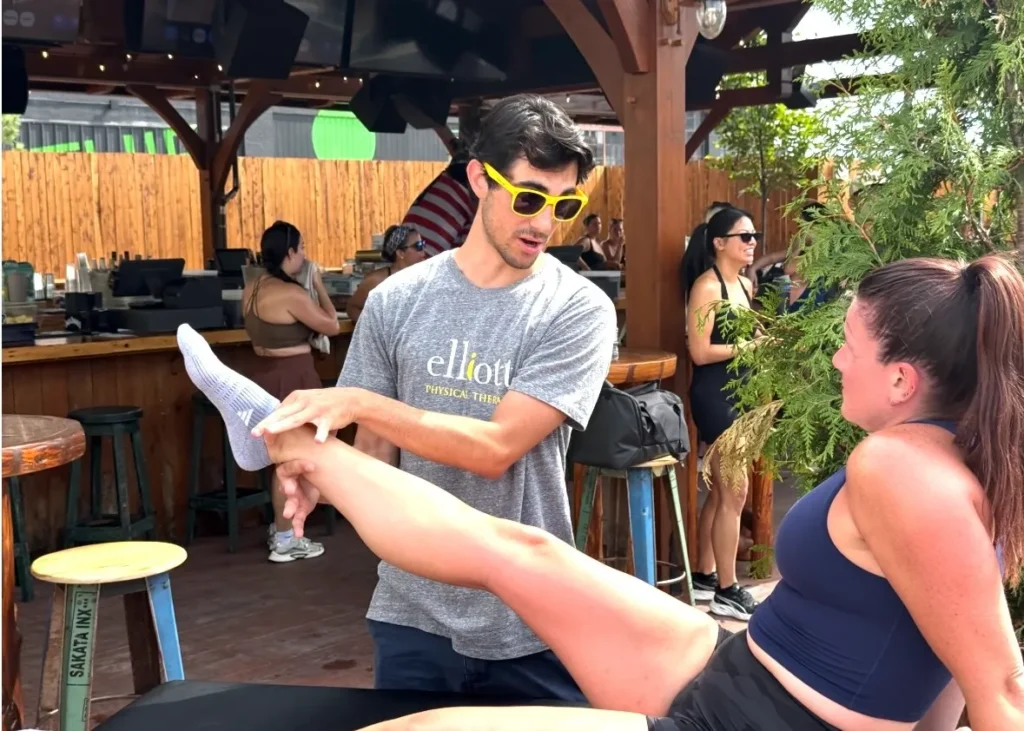



Don’t Let Foot Pain Slow Your Roll!
Foot pain doesn’t have to keep you from the activities you enjoy. Schedule an evaluation at Elliott Physical Therapy today, and let our physical therapy experts identify the cause of your pain and create a personalized plan to get you moving comfortably again.
Sources
https://www.ncbi.nlm.nih.gov/books/NBK431073/, https://bjsm.bmj.com/content/55/19/1106 , https://www.ncbi.nlm.nih.gov/pmc/articles/PMC5112330/ , https://orthoinfo.aaos.org/en/diseases–conditions/stress-fractures-of-the-foot-and-ankle/