

Determining The Origins of Your Pain
Are you tired of dealing with pain day in and day out? Have you been struggling with persistent pain for months or even years, and it’s taking a bigger and bigger toll on your life? For some people with pain, the simplest tasks are now major challenges, and over-the-counter and/or prescription pain meds don’t seem to provide any relief.
Unfortunately, this is a common experience for millions of Americans. Recent research has found that over 100 million people suffer from persistent pain each year. This is where Elliott Physical Therapy steps in.
At Elliott Physical Therapy, we understand that pain comes in various forms, affecting people in unique ways. We’re committed to staying at the forefront of the latest advancements in pain management, ensuring that our patients receive the best care possible.
We know that pain can be overwhelming, but we’re here to remind you that there is hope!


Understanding Different Types of Pain
Pain is a complex sensation, and it can be categorized into five main types, each with its own characteristics and underlying mechanisms. Here’s an explanation of these types:
- Nociceptive Pain: This type of pain results from the stimulation of specialized nerve sensors called nociceptors. Nociceptive pain is often described as sharp, aching, or throbbing and is typically localized. It can be acute, like when you accidentally bump your knee, or chronic, as seen in conditions like arthritis.
- Central Pain: Central pain arises from dysfunctions within the central nervous system (i.e., the brain and spinal cord). Central pain starts inside the central nervous system itself. Examples include fibromyalgia and pain associated with spinal cord injuries.
- Neuropathic Pain: This pain type is caused by nerve damage or dysfunction. It may manifest as burning, tingling, or shooting sensations. It is typically associated with conditions like diabetic neuropathy or nerve injuries (i.e., sciatica).
- Psychosocial Pain: Psychosocial pain involves mental and/or social factors influencing pain perception. Stress, anxiety, depression, and social support (or lack thereof) can significantly influence how pain is experienced. It is not directly tied to tissue damage but is due to mental and emotional states.
- Movement System Pain: This pain is directly related to the biomechanics of movement, such as issues with joint positions or control and/or muscle imbalances. Physical therapists often work with this type of pain, prescribing targeted exercises to correct movement dysfunctions contributing to the discomfort.
Regardless of the type of pain you’re dealing with, our therapists will work with you to identify and target the sources of your pain. We’ll use gentle techniques and exercises to address these issues and help you find relief.
✨ New In-Clinic Updates
We’re always looking for ways to make your experience at Elliott Physical Therapy smoother and more patient-focused! Here are two exciting updates you’ll notice during your next visit:
Easy QR Code Check-In
Checking in is now quicker than ever! Simply scan the QR code at the front desk with your phone and complete your check-in in seconds – no clipboard needed.
Sidekick for Easier Documentation
We’ve introduced Sidekick, an AI-based recording tool that helps our physical therapists with their documentation. This means your PT can spend more time being present with you instead of taking notes during your session. You’ll just need to sign a quick consent form before we begin.
Both updates are designed to give you a more seamless and personalized experience at Elliott PT. We can’t wait for you to try them out!
Finding Relief from Pain with Physical Therapy
When you come to a physical therapy session at Elliott Physical Therapy, you’re taking a significant step towards finding relief from pain and improving your overall well-being. Your first session will typically begin with questions about your medical history, the specific nature of your pain, its location, and any factors that make it better or worse.
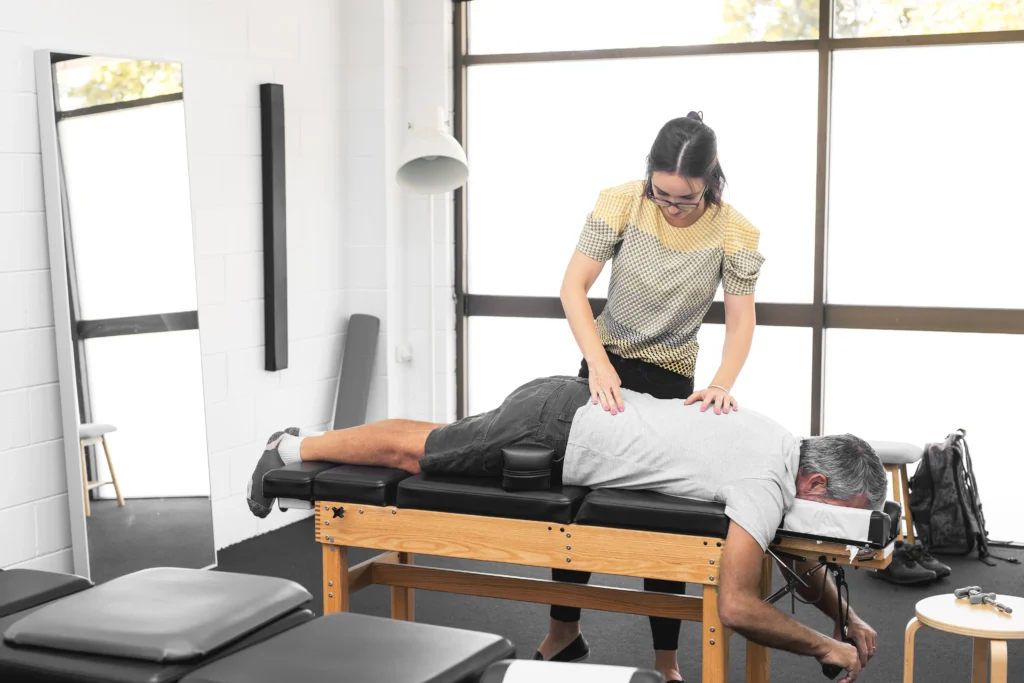
After discussing your medical history, your therapists will evaluate your muscle strength, range of motion, and any areas of tenderness. They’ll also assess your movement patterns to identify any abnormalities or dysfunctions.
Based on the information gathered during the evaluation, your physical therapist will work to identify the underlying issue causing your pain. This may involve determining the type of pain (e.g., nociceptive, neuropathic, or movement system-related) and its primary sources.
Once your therapist has a clear understanding of your condition, they will create a personalized treatment plan tailored to your needs. Our treatments may include manual therapy techniques to release tension and improve joint mobility. Exercise is another crucial component, tailored to your specific needs and designed to correct any movement dysfunctions. Education plays a vital role in empowering you with the knowledge and tools to manage your pain effectively.
Patients are often fearful of making their condition worse. As a result, they often either do nothing or get so frustrated that they ignore clear warning signs and push through. In either case, the result is more suffering. The key is to find a balance in the middle, where you do just enough to improve but not enough to make it worse.
At Elliott Physical Therapy, our therapists will help you find that balance, guiding you through the steps you need to take to feel good again!
Sources: https://www.ncbi.nlm.nih.gov/pmc/articles/PMC6256939/, https://www.ncbi.nlm.nih.gov/pmc/articles/PMC6203285/, https://www.jospt.org/doi/10.2519/jospt.2016.0602, https://www.researchgate.net/publication/335681194_Pain_Theory, https://www.ncbi.nlm.nih.gov/books/NBK545194/
💪 Maintaining Strength While Using GLP-1 Medications
Medications like Ozempic® and Wegovy®, part of a class known as GLP-1 receptor agonists, are becoming increasingly common for managing diabetes, obesity, and related health conditions. These drugs help regulate appetite and blood sugar and are highly effective at promoting weight loss. However, one concern is that weight loss can sometimes include a decrease in lean body mass, which may lead to weakness, fatigue, and a higher risk of injury.
That’s where our personal training program comes in. Research shows that combining GLP-1 use with a structured exercise program helps patients lose fat while preserving valuable muscle and strength. At Elliott Physical Therapy, our team works closely with physicians, nutrition specialists, and fitness professionals to provide a comprehensive approach that supports long-term health.
Our program begins with a detailed intake from your personal trainer, including body composition measurements, movement screening, and a one-on-one consultation to understand your goals. From there, participants take part in weekly strength-focused training sessions – either in-person or remotely – with the option to add nutrition support.
The goal is simple: help you stay strong, active, and confident throughout your weight loss journey. By protecting lean muscle, you’ll not only feel better now but set the foundation for a healthier future.


Building Up Your Strength to Walk Again: Six Simple Steps
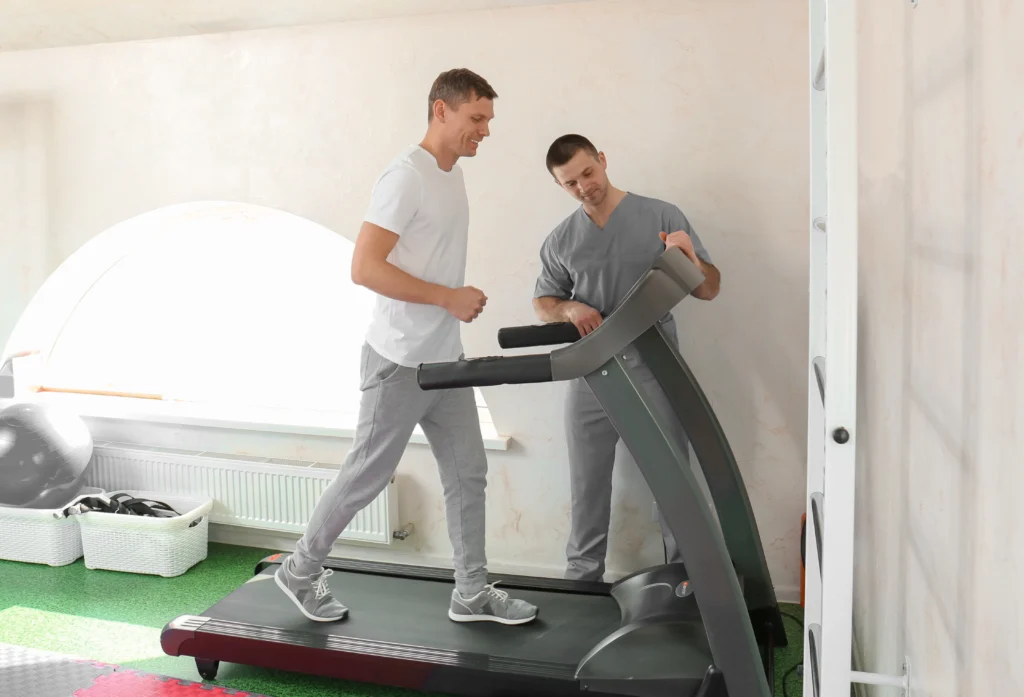
Are you looking to get back outside and walking with the weather starting to cool down? If it’s been a while since you’ve been walking regularly, getting back on your feet can feel daunting. Simple activities like strength, balance, and coordination may have slipped away, but there’s good news: you can rebuild these foundational skills at home with six gentle, yet effective, exercises.
- Leg Swings (Single-Leg Swing) – Stand with one hand on a counter or chair and swing the opposite leg forward and back. This helps your body re-learn balance and the rhythmic movement of walking.
- Sit-to-Stand – Practice rising from a seated position using only your leg strength. It targets key muscles like your quads and glutes used every time you stand up or take a step.
- Calf Raises – Hold onto a stable surface and lift onto your toes, then lower slowly. This strengthens the calves, which power forward motion in walking.
- Single-Leg Balance – Shift weight onto one leg, and as balance improves, try lifting the other foot off the ground. This enhances stability during the single-leg phase of walking.
- Arm Swing – Stand and gently swing your arms as you would when walking. This helps loosen your torso and restores natural arm – leg coordination.
- Big-Toe Press – Seated, press down with just your big toe (other toes relaxed), like stepping on a “gas pedal.” Strong big-toe control is surprisingly important in reducing fall risk.
These exercises are low-impact, require minimal equipment, and can be done safely at home. Start with just a few repetitions each, listen to your body, and gradually build up confidence and strength as you work toward walking again.
Exciting Company Updates
Online Scheduling for New Patients
We’re excited to announce that online scheduling for new patients is now available directly through our website! Online scheduling has already made life easier for our current patients, giving them the flexibility to book appointments quickly and conveniently. We’re excited to now extend this same simple option to new patients, so you can enjoy a smooth start to your care with us.
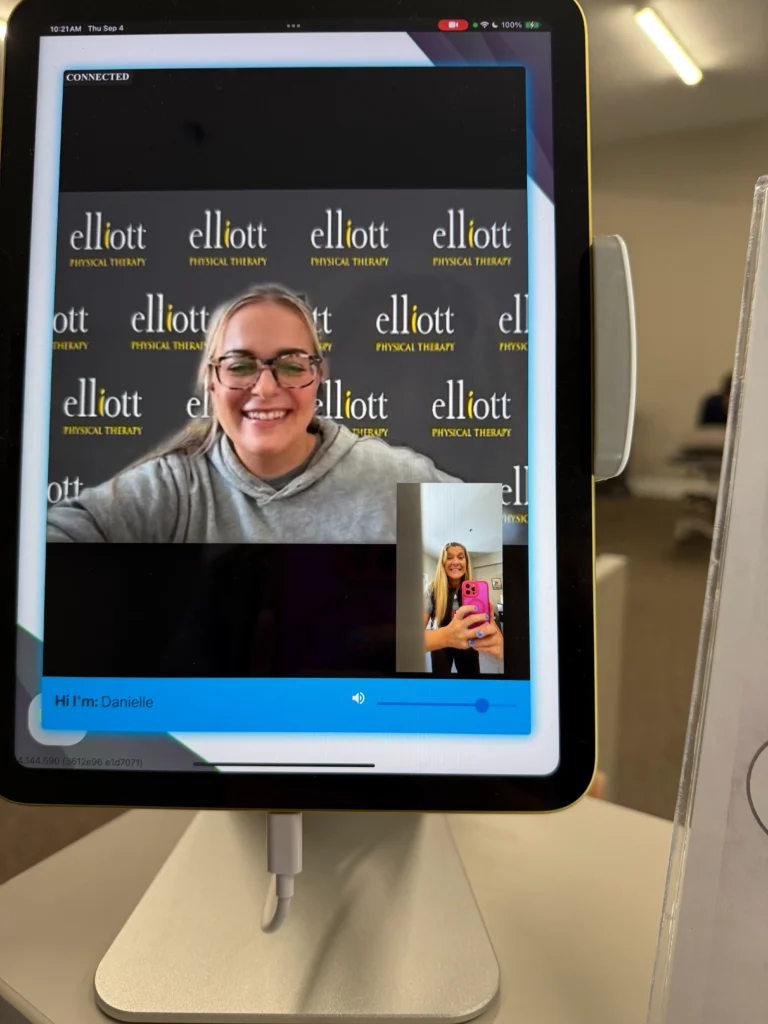
In addition, we’re introducing Virtual Sally, an extra layer of support at our front desks. Through Virtual Sally, you’ll be able to video chat with one of our team members who can help answer questions, assist with check-in, schedule future appointments, and more. This new tool will supplement our in-clinic staff to ensure you always receive the support and attention you need.
Nutrition Services Coming in October
Starting in October, nutrition services will be available in person at our Needham clinic and virtually across all Elliott Physical Therapy locations. Nutrition plays an important role in recovery, performance, and overall health, and we’re proud to support this new offering for our patients.
We’re excited to have Lauren Abeles, MS, RD, LDN, a registered dietitian who will be providing these services from our Needham office.
Whether your goal is to optimize healing after an injury, improve energy, manage weight, or build healthier long-term habits, Lauren will work with you to create a personalized plan that fits your lifestyle. By combining expert nutritional guidance with your physical therapy care, you can reach your goals faster and feel your best.
Test Your Pain Knowledge!
Think you know the facts about pain and how physical therapy can help? Take this quick True/False quiz to see how much you’ve learned from this month’s article.
Question 1:
True or False: Over 100 million Americans suffer from persistent pain each year.
Question 2:
True or False: Nociceptive pain is caused by damage to the nerves themselves.
Question 3:
True or False: Central pain starts within the brain or spinal cord rather than from an injury to the body’s tissues.
Question 4:
True or False: Physical therapy focuses only on exercise and does not include education or manual therapy.
Question 5:
True or False: Doing nothing or pushing through pain without guidance can both make your condition worse.
🎯 Score Yourself:
5/5: Pain-savvy pro!
3–4/5: Great start — a couple of myths left to bust.
2/5 or fewer: No worries — we’ve got your back with clear guidance.
Want a plan to manage your pain safely? Ask your PT at your next visit. We’re here to help you move better and feel better.

No-Bake Caramel Brownies Recipe (Gluten-Free, Vegan)
- Brownies
- 1 ½ c pitted medjool dates
- 1 c walnuts
- ½ c hazelnuts
- ⅓ c cocoa powder
- Salted Caramel
- ½ c almond butter
- ¼ c maple syrup
- 1 tablespoon almond milk
- 1 tablespoon coconut oil
- ¼ teaspoon sea salt
Brownie: Combine all ingredients in a food processor until it reaches a brownie consistency. Press down into lined loaf pan.
Salted Caramel: Stir together all ingredients until smooth and pour over top of brownie layer. Place in the freezer to firm (about 1hr.)
Once set, sprinkle with flaky sea salt, slice into 10-12 squares, and enjoy! Best stored in the freezer.