

Unfreeze Your Shoulder; Reclaim Your Active Life
How Physical Therapy Can Help You Manage Frozen Shoulder
We recently worked with a patient who came to us after struggling with shoulder pain for several months. While she hoped it would go away on its own, it only got worse over time. When she visited us, she was also struggling to lift her shoulder overhead or reach behind her back.
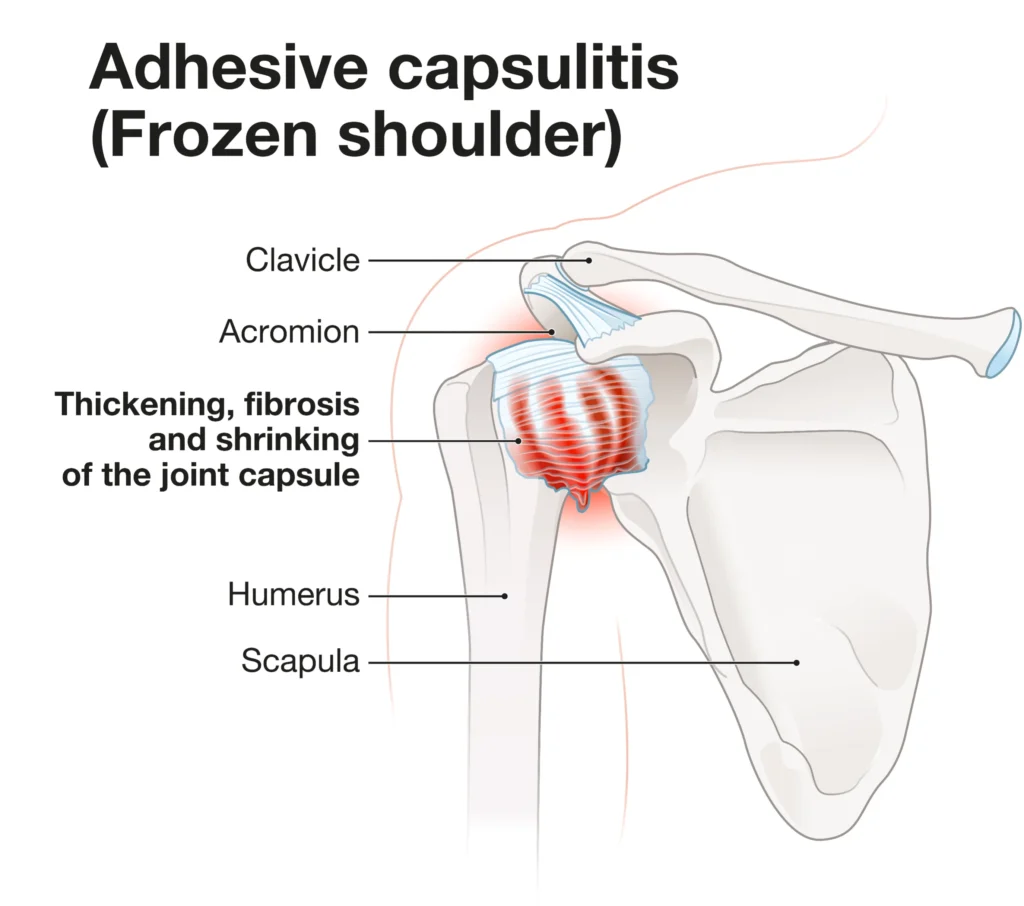
This patient had developed adhesive capsulitis, more commonly known as frozen shoulder. It gets that name from the fact that the condition causes the shoulder to “freeze up” after a period of intense pain.
A frozen shoulder will eventually “unfreeze,” but that process can take anywhere from 1-3 years. Fortunately, the team at Elliott Physical Therapy can help you manage your symptoms and facilitate a more efficient recovery.


What Causes Frozen Shoulder?
The condition develops when the capsule of connective tissue that wraps around your shoulder thickens and tightens, restricting the joint. However, researchers aren’t entirely clear why this happens. Certain factors can increase your risk:
- Being a woman between the age of 40 and 60 years old
- Having certain diseases, including diabetes, thyroid conditions, or cardiovascular disease
- Immobilizing your shoulder after an injury or surgery.
Understanding the Three Phases Of Frozen Shoulder
One reason frozen shoulder recovery can take so long is that the condition progresses through three distinct phases, each with its own set of symptoms and concerns. Here’s what you need to know about each one:
1. Freezing Phase
This initial stage is marked by increasing pain and stiffness in the shoulder. During this phase, we focus on maintaining your shoulder’s range of motion to help reduce stiffness and improve comfort.
Duration
Anywhere from six weeks to nine months
Symptoms
- A gradual onset of pain that worsens with movement
- Increased stiffness in the shoulder
- Pain is often worse at night, disrupting sleep
2. Frozen Phase
The frozen stage involves less pain but greater stiffness, significantly restricting your shoulder’s movement. We’ll focus on improving your shoulder’s mobility using stretching or manual therapy techniques.
Duration
Anywhere from four to six months
Symptoms
- Decreased pain compared to the freezing stage
- Significant stiffness and difficulty moving the shoulder
- Everyday movements like reaching overhead or behind the back become challenging
3. Thawing Phase
In the final stage, your pain decreases, and your shoulder’s range of motion gradually returns. However, it’s important to continue physical therapy to ensure you make a full recovery.
Duration
Anywhere from six months to two years
Symptoms
- Gradual improvement in mobility as scar tissue around the shoulder capsule begins to loosen and break down
- Pain continues to decrease
Exercise of the Month
Shoulder Extension Side Lying
Begin lying on your side with your bottom arm bent for support. Start with your top arm resting on your side. Gently lift your top arm backward, extending it behind you while keeping your elbow straight. Hold for a moment, then slowly return to the starting position. This exercise helps improve shoulder extension and mobility, which is particularly beneficial during frozen shoulder recovery. 3 Sets, 10 Reps.
Physical Therapy and Frozen Shoulder: What You Need to Know
Physical therapy plays an essential role in helping you manage frozen shoulder symptoms at all three stages. Our team will work with you to develop a comprehensive treatment program, pulling from a range of different techniques based on your current symptoms:
Acute Pain Management
We’ll help you manage shoulder pain (especially in the freezing phase) with techniques such as dry needling, Kinesio taping, hot and cold therapy, and more.
Manual Therapy
Various hands-on techniques can gently mobilize the shoulder joint, improve joint capsule movement, and reduce pain.
Mobility Exercises
Targeted exercises and techniques help improve your shoulder’s range of motion in all directions, gradually restoring your ability to reach, lift, and rotate your arm.
Strengthening Exercises
Strengthening the muscles surrounding the shoulder joint enhances stability and supports improved function.
Management Strategies
Understanding frozen shoulder is an integral part of managing it. We’ll help you navigate the difficulties of the condition, including identifying which stage you’re in and providing you with home exercises to help alleviate your symptoms.
Why Dynamic Warm-Ups Matter Before You Move
If you’ve ever jumped into a workout or activity and felt stiff, sluggish, or “off,” your body may have been missing one key step: a proper warm-up. Dynamic warm-ups are an effective way to prepare your body for movement by gradually increasing blood flow, joint mobility, and muscle readiness before exercise or daily activity.
What is a dynamic warm-up? A dynamic warm-up uses controlled, active movements that gently take your joints and muscles through ranges you’ll use during activity. Instead of holding stretches, you’re moving – think leg swings, arm circles, walking lunges, or gentle mobility drills that wake the body up.
Why do dynamic warm-ups work so well? Dynamic movement helps your muscles respond faster, improves coordination, and allows joints to move more smoothly. This can lead to better performance and reduced risk of strains or setbacks. Because these movements closely match what your body is about to do, they create a smoother transition into exercise, sports, or physically demanding tasks.
When should you integrate them? Dynamic warm-ups are ideal before workouts, runs, sports practices, yard work, or even long days that require repetitive movement. They don’t need to be long; 5 to 10 minutes is often enough to make a difference. The key is consistency and choosing movements that match your activity level and goals.
At Elliott Physical Therapy, our therapists often help patients learn warm-up strategies that support safer movement and long-term progress. A few minutes of intentional movement can go a long way toward helping your body feel ready and capable, every time you get moving.
Frozen Shoulder, Menopause, and the Role of Hormones
Frozen shoulder most commonly affects women between the ages of 40 and 60 – a time that often overlaps with perimenopause and menopause. While frozen shoulder has long been associated with conditions like diabetes and thyroid disorders, newer research is shedding light on another important factor: hormonal changes, particularly declining estrogen levels.
Estrogen plays a role in regulating inflammation, collagen turnover, and joint lubrication. During perimenopause and menopause, decreasing estrogen levels may contribute to increased inflammation and changes in connective tissue, which can cause the shoulder capsule to thicken and stiffen. This helps explain why frozen shoulder appears more frequently during this life stage.
Recent studies suggest that HRT (Hormone Replacement Therapy) may lower the risk of developing frozen shoulder. A Duke Health-led study found that post-menopausal women using estrogen therapy had lower rates of adhesive capsulitis compared to women who were not on hormone therapy. Importantly, hormone therapy is not a treatment for an already frozen shoulder, but it may have a preventative or protective role by supporting overall joint health and reducing inflammatory changes.
For individuals who are already experiencing frozen shoulder symptoms, evidence-based treatments remain essential. These include:
- Physical therapy to preserve and restore range of motion
- Targeted exercises and manual therapy to address stiffness and pain
- Anti-inflammatory strategies, which may include injections or medications when appropriate and prescribed by a medical provider
At Elliott Physical Therapy, we recognize that frozen shoulder is rarely caused by a single factor. For women in perimenopause and menopause, a team-based approach can be especially valuable. While physical therapists do not prescribe hormone therapy, we often work collaboratively with patients’ primary care providers to support shoulder health, movement, and function during this transition.
If you are noticing increasing shoulder stiffness, pain, or limited motion, especially during midlife, early evaluation and treatment can make a significant difference.
Sources: https://ortho.duke.edu/blog/jocelyn-wittstein-study-connects-estrogen-and-frozen-shoulder-menopausal-women?, https://corporate.dukehealth.org/news/hormone-therapy-appears-reduce-risk-shoulder-pain-older-women?
Test Your Frozen Shoulder Knowledge
Question 1 of 5
Score: 0/5

Healthy Recipe: Anti-Inflammatory Salmon Bowl
Supporting your frozen shoulder recovery from the inside out starts with nutrition. This anti-inflammatory salmon bowl is packed with omega-3 fatty acids, antioxidants, and nutrients that help reduce inflammation and support tissue healing.
Ingredients
- 6 oz wild-caught salmon fillet
- 1 cup cooked quinoa
- 1 cup mixed greens (spinach, kale)
- ½ avocado, sliced
- ½ cup roasted sweet potato cubes
- ¼ cup blueberries
- 2 tbsp walnuts, chopped
- 1 tbsp extra virgin olive oil
- 1 tsp fresh turmeric, grated (or ½ tsp ground)
- Lemon juice, salt, and pepper to taste
Instructions
1. Preheat oven to 400°F. Season salmon with salt, pepper, and a pinch of turmeric. Bake for 12-15 minutes until cooked through.
2. While salmon cooks, arrange quinoa as the base of your bowl. Top with mixed greens, roasted sweet potato, avocado slices, and blueberries.
3. Once salmon is done, place it on top of the bowl. Sprinkle with chopped walnuts.
4. Drizzle with olive oil and fresh lemon juice. Add remaining turmeric if desired.
Why it helps: Salmon provides omega-3s that reduce inflammation, while turmeric contains curcumin, a powerful anti-inflammatory compound. The combination of healthy fats, antioxidants from berries and greens, and quality protein supports your body’s natural healing processes during frozen shoulder recovery.
Ready to Break Free From the Icy Grip of Frozen Shoulder?
If you suspect you have frozen shoulder, schedule an appointment at Elliott Physical Therapy. Physical therapy is essential for managing the condition in all three phases, and the earlier you can begin treatment, the better your outcomes will be. Our team is here to help you manage pain, restore mobility, and understand your shoulder’s movement patterns.
Don’t let frozen shoulder hold you back. Call us today to schedule your initial evaluation!
Sources: https://www.ncbi.nlm.nih.gov/pmc/articles/PMC7031440/