


Physical Therapy Can Help You Resolve Unwanted Knee Pain
Do you experience pain and swelling with squatting or climbing stairs? Do your knees often catch or lock up, making it difficult to perform daily tasks that once seemed simple? At Elliott Physical Therapy, our physical therapists can help you find relief and get you moving again!
Knee pain can be debilitating, making it difficult to walk, run, and move. It may even hinder your ability to do simple things like sitting through a movie or a long car ride. The location of your pain helps determine which structures are involved and can help ensure proper treatment.
Often the pain leads to avoiding activity, but this strategy does not help in the long run. Inactivity often leads to more dysfunction and disability. Physical therapists are movement experts, and if your symptoms are severe or last more than a few weeks, your first step should be to contact our physical therapists!
At Elliott Physical Therapy, we can get you moving once again by relieving your pain and enhancing your body’s natural healing process. Call today to schedule an appointment with one of our experts!
What Are the Most Common Knee Injuries?
Your knee is one of the largest joints in your body, made up of a complex system of bones, tendons, and ligaments. Knee injuries can result from direct contact or a sudden movement that strains the knee. When there is no specific event connected to the damage, the most common knee pain factors are excessive activity or a lack of activity.
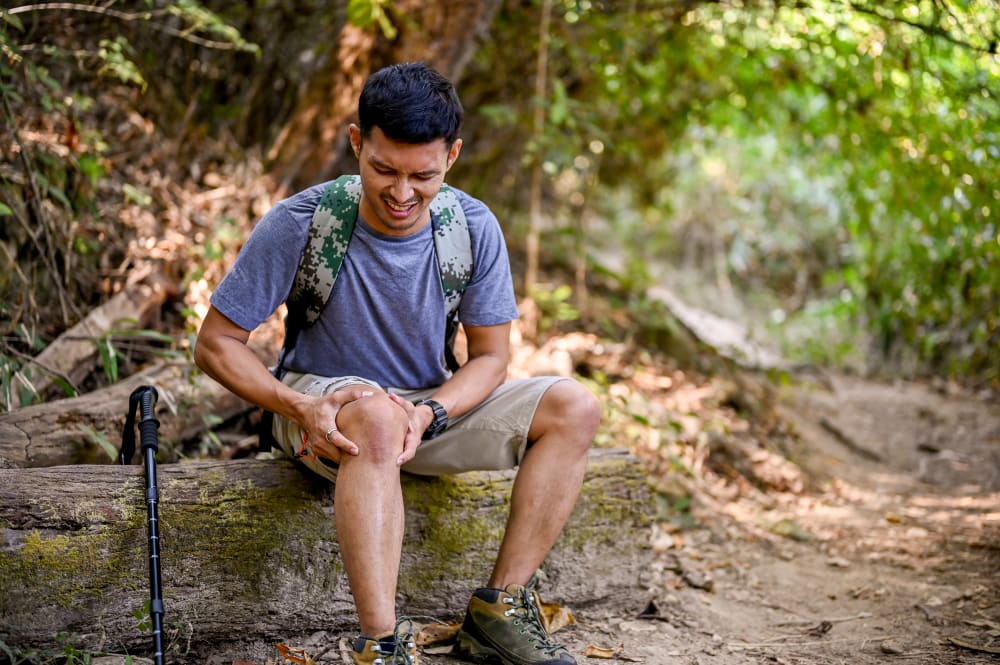
Knee pain can be mild or severe and includes sprained ligaments, meniscus tears, cartilage tears, tendonitis, and arthritis.
Arthritis
The most common type of arthritis for knee pain is osteoarthritis (OA). This condition occurs when the cartilage surrounding your joints deteriorates, and the joint no longer has a sufficient cushion between the bone. This leads to joint inflammation with varying levels of pain and dysfunction.
Meniscus Tear
The meniscus serves as a shock absorber and helps maintain stability in the knee. A meniscus tear can be caused by contact or non-contact activity when the knee twists suddenly. Some tears are the result of wear and tear.
Articular Cartilage Injury
The articular cartilage is a smooth covering on the bones that allows for frictionless sliding of one bone on another. Articular cartilage is injured by direct trauma or wear and tear.
Ligament Injuries
Our bones are connected by ligaments. The ligaments in your knee act like leather straps to hold the bones together and keep your knee stable. Ligaments are often stretched and/or torn during a sudden motion. The important ligaments in the knee include:
- Anterior cruciate ligament (ACL). It is located in the center of the knee and controls rotation and forward movement of the shin bone.
- Posterior cruciate ligament (PCL). It is located in the back of the knee and controls the backward movement of the shin bone.
- Medial collateral ligament (MCL). The medial collateral ligament is on the inside of your knee and provides stability to sideway motions.
- Lateral collateral ligament (LCL). The lateral collateral ligament is on the outside of your knee and provides stability to the sideways motions.
Tendonitis
Your tendons are thick connective tissues that attach muscles to bones. Tendonitis occurs when the tendon becomes inflamed due to abnormal and often excessive stress. It is common with jumping and landing motions, and also in sports like skiing, cycling, or hurdling.
Knee pain can make it hard to walk, rise from a chair, climb stairs, or play sports. Our physical therapists are trained to diagnose and treat knee pain and help ease your pain and get you back to doing what you love!
How Physical Therapy Can Help Your Knee Pain
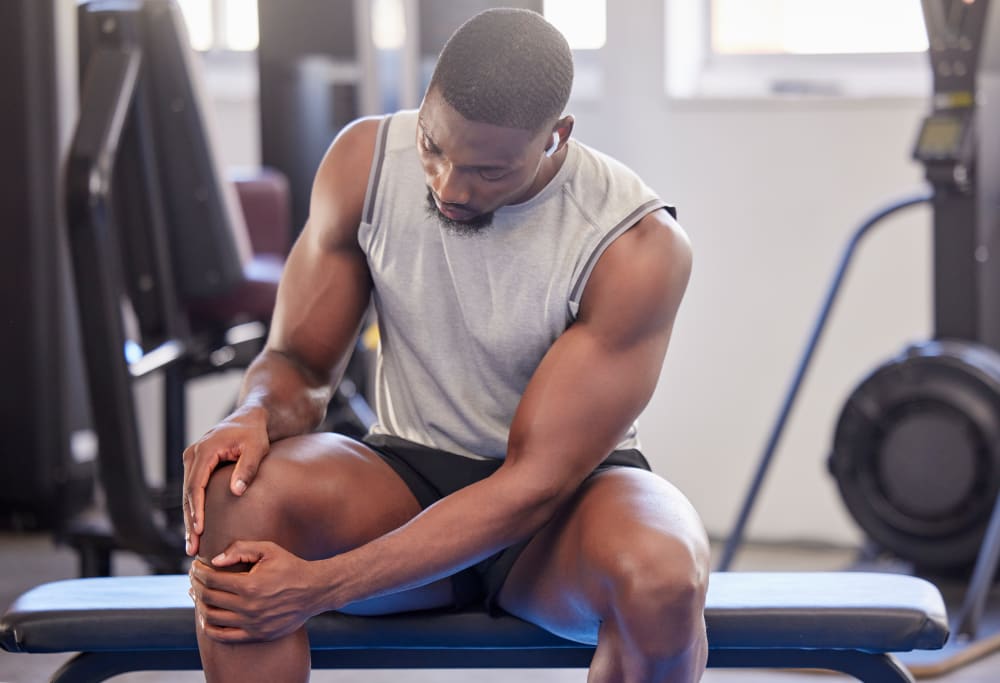
Physical therapy for knee pain involves a thorough assessment of your entire lower extremity, including your hip, knee, and foot. Our team will examine your knee for signs of instability or structural damage and assess your stance, gait, and functional movements like squats and steps. Your therapist will prescribe the right treatments to help decrease your knee pain and improve overall mobility.
We will provide you with a supervised, progressive program to get you moving again. Our programs to reduce pain and restore function consist of range-of-motion, strength training, proprioception, and neuromuscular control activities.
If you are living with knee pain, contact Elliott Physical Therapy today. We’ll help relieve your pain so you can get back to living your life comfortably, without limitations!

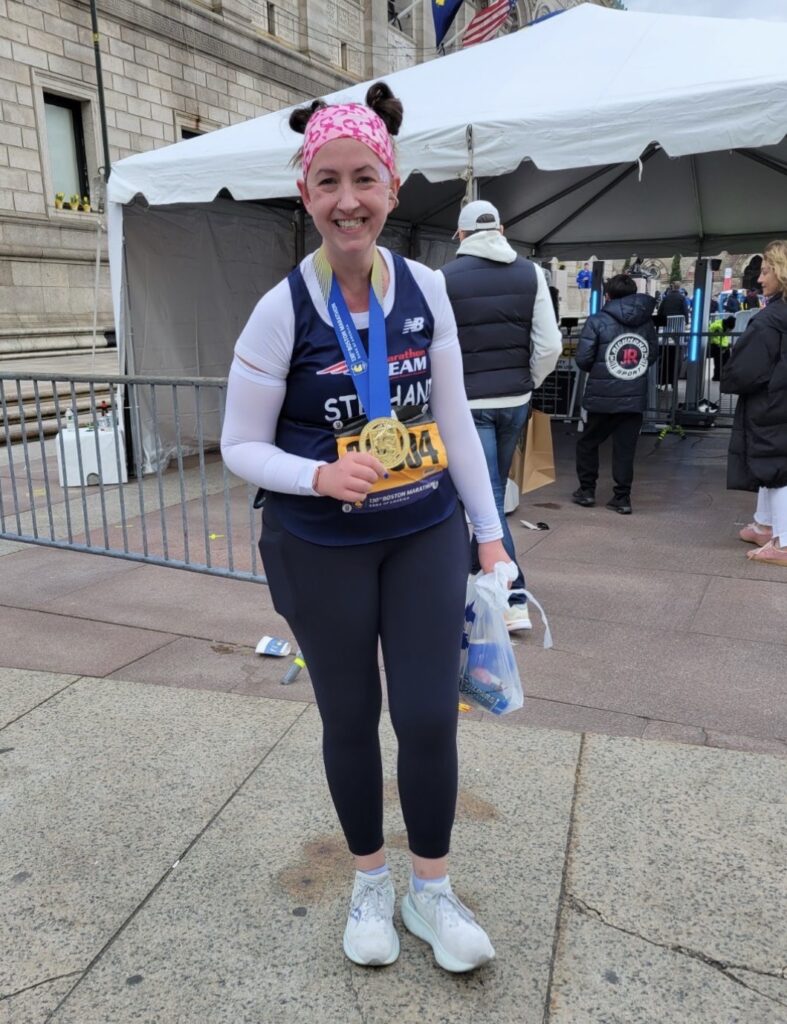
Huge congratulations to two of our amazing Elliott Physical Therapy Team Members Who Crossed the Boston Marathon!
Eric, our Clinical Manager at Elliott Physical Therapy in South Boston, dedicates every day to helping runners of all levels prevent injury, recover faster, and perform at their best — and yesterday he proved he practices what he preaches!
Stephanie, our Office Manager at our Dorchester location, is a passionate runner who knows firsthand the dedication it takes to train for 26.2 miles. We are beyond proud of you both!
At Elliott Physical Therapy, we specialize in running injury rehabilitation, sports recovery, dry needling, and Normatec compression therapy to help runners in South Boston and beyond reach their goals — whether that’s finishing their first 5K or crossing the Boston Marathon finish line.
Exercise of the Month
Seated Leg Extension
(Quadriceps, Knees)
Sit up straight in a chair with your feet flat on the floor. Slowly extend one leg out in front of you until it’s straight, squeezing your thigh muscle. Hold briefly, then lower it back down with control. Alternate legs or complete all reps on one side before switching. 3 Sets, 10 Reps (each leg). Materials needed: chair.
5 Everyday Habits That Can Make Knee Pain Worse
Knee pain doesn’t always come from a major injury. In many cases, small daily habits can gradually place extra stress on the knee joint. Over time, these repeated stresses can lead to discomfort, stiffness, or reduced mobility. The good news is that making a few simple changes can help protect your knees and keep you moving comfortably.
1. Sitting for Long Periods
Spending hours sitting with your knees bent, whether at a desk, in the car, or on the couch, can cause stiffness in the knee joint. Standing up, stretching, or walking around every 30–60 minutes can help keep the joints moving and reduce discomfort.
2. Wearing Worn-Out Shoes
Shoes that have lost their support or cushioning can change how force travels through your legs during walking or exercise. This extra stress can eventually irritate the knees, especially for people who spend a lot of time on their feet.
3. Sudden Increases in Activity
Jumping into a new workout routine or increasing activity too quickly can overload the knee joint. Gradually building up intensity and allowing time for recovery can help reduce the risk of irritation.
4. Frequent Stair Use Without Strength Support
Stairs place more load on the knees than level walking. If the muscles that support the knees, such as the quadriceps and glutes, aren’t strong enough, repeated stair use can sometimes aggravate knee discomfort.
5. Ignoring Minor Knee Pain
Many people push through mild knee discomfort, assuming it will go away on its own. However, small issues can sometimes worsen if left unaddressed.
If knee pain is starting to interfere with your daily activities, the team at Elliott PT can help. A physical therapist can evaluate movement patterns, identify contributing factors, and create a personalized plan to help reduce pain and improve knee function. Early attention to knee pain can make a big difference in staying active and healthy.
Knee Health Quiz
Test your knowledge about knee pain, injury, and prevention. Choose the best answer for each question!
Kale Salad with Apple, Beets & Walnuts
A hearty, nutrient-packed salad loaded with anti-inflammatory ingredients. Kale delivers vitamins C and K to support joint health, while walnuts provide omega-3 fatty acids that help reduce inflammation.
Ingredients
- 4 cups kale, stems removed and leaves chopped
- 1 crisp apple (Honeycrisp or Fuji), thinly sliced
- 1 small beet, cooked and diced
- ¼ cup walnuts, roughly chopped
- 3 tablespoons raisins or dried cranberries
- 2 tablespoons apple cider vinegar
- 2 tablespoons olive oil
- 1 teaspoon honey
- Salt and pepper to taste

Instructions
- Massage kale with a drizzle of olive oil for 1–2 minutes until slightly softened.
- Whisk together apple cider vinegar, remaining olive oil, honey, salt, and pepper in a small bowl.
- Combine kale, apple, beets, walnuts, and raisins in a large bowl.
- Drizzle dressing over the salad, toss well, and serve. Enjoy!
Ready to Get Your Knees Moving Again?
Knee pain doesn't have to hold you back from the activities you love. At Elliott Physical Therapy, our physical therapists are ready to help you identify the cause of your pain and build a personalized plan to get you back on your feet. Don't wait for a small problem to become a bigger one — early care makes all the difference.
Sources
https://www.sciencedirect.com/science/article/abs/pii/S1466853X17304418
https://www.jospt.org/doi/full/10.2519/jospt.2018.0301